Raising Teenagers on a Homestead in a Modern World
There’s something magical about raising young kids on a homestead. When they’re little, everything is exciting. A chick hatching from an egg is a miracle. Planting potatoes feels like treasure hunting. A muddy puddle becomes an adventure. They follow you everywhere asking questions, wanting to help, wanting to learn. They’re curious about life in a way adults often forget how to be.
Then they become teenagers.
And suddenly, somewhere between childhood and adulthood, that endless excitement seems to fade.
I don’t think this is just a homestead thing. I think it’s part of growing up in today’s world. Screens replace sunsets. Phones replace conversations. Comfort replaces adventure. Teenagers begin looking outward instead of inward, dreaming about what’s beyond the property line instead of appreciating what’s inside it.
As a father of four kids living on a homestead, I’ve been learning this lesson in real time.
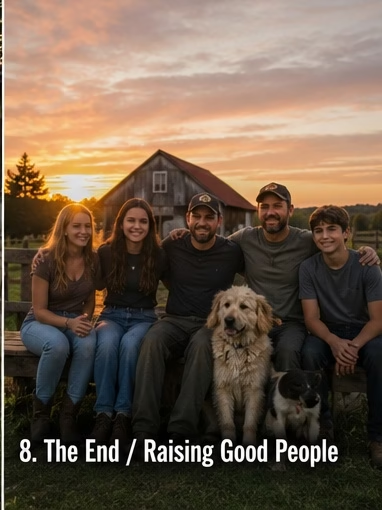
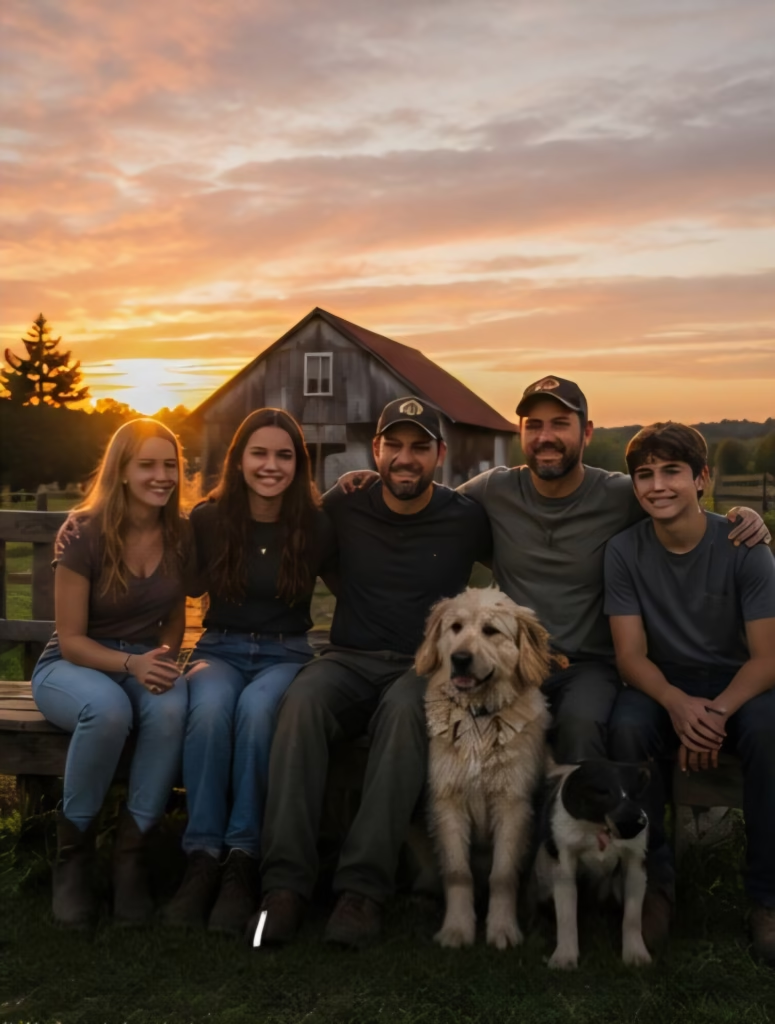
I have two boys and two girls. My oldest son is 18. Then come my twin daughters, both 16. And my youngest boy is 12. Watching all four of them grow into their own people has taught me more about parenting than any book ever could.
What I’ve realized is this: raising teenagers on a homestead is not about creating perfect little farmers. It’s about helping them discover who they are while giving them roots strong enough to come back to someday.
And that’s harder than it sounds.
When Kids Are Young, the Homestead Feels Like Magic
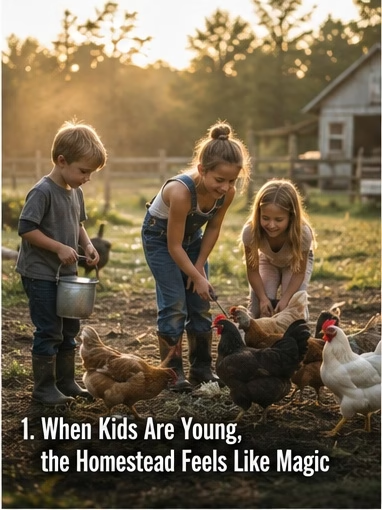
When children are small, homestead life almost raises them for you.
They want to collect eggs.
They want to feed the animals.
They want to help stack wood even if they only carry one log at a time.
They want to ride on the tractor.
They want to explore the forest.
There’s a natural thirst for knowledge and a genuine excitement about life.
I remember when my oldest son was younger. He lived for the outdoors. Hunting, fishing, camping—anything that involved being outside made him happy. We could spend hours by the water and he’d never get bored. Back then, experiences mattered more than possessions.
My youngest boy is still in that stage. He absolutely loves farm life. Animals fascinate him. He gets excited about planting fruits and vegetables. He wants to know how things grow, how things work, how to build and fix things. He still sees wonder in everyday chores.
That stage is beautiful.
But it doesn’t last forever.
Teenagers Change — And So Does Their Relationship With the Homestead
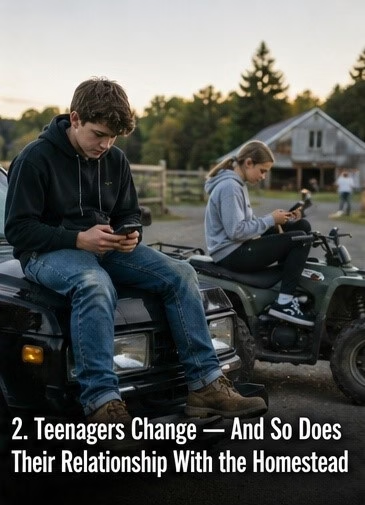
At some point, teenagers start pulling away from the family lifestyle. That’s natural. They’re trying to figure out who they are.
The hard part for homesteading parents is that teenagers become physically more capable while often becoming mentally less motivated.
When they’re 8 years old, they want to help but can’t do much.
When they’re 16, they can help a lot… but often don’t want to.
That shift can be frustrating.
My oldest son still loves the outdoors, but now cars have started replacing fishing trips in his priorities. That doesn’t mean he’s lazy or that he’s forgotten everything we taught him. It just means he’s becoming a young man with new interests and new dreams.
My daughters are going through their own journeys too.
One of them has always had a deep love for animals, especially dogs. For years she wanted to become a veterinarian. She talked about it constantly. But now that she’s getting older, she’s not sure anymore. And honestly, that’s okay. Teenagers are supposed to question things. They’re supposed to change their minds. Part of growing up is realizing that dreams evolve.
My other daughter is completely different. She doesn’t enjoy farm work at all. She doesn’t like getting dirty. She’s not interested in planting gardens or feeding animals. Instead, she loves reading. She dreams of opening a bookstore and coffee shop someday.
Years ago, I probably would have struggled more with that. Part of me wanted my kids to love the homestead the same way I do.
But parenting teenagers teaches humility.
Your children are not copies of you.
They are their own people.
Boys and Girls Often Experience the Homestead Differently
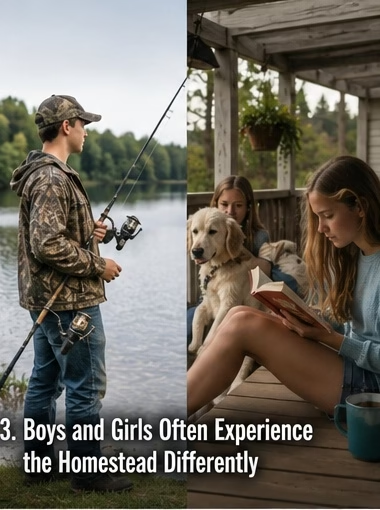
This is something I’ve noticed more and more as my kids get older.
Generally speaking, boys often seem drawn toward the adventure and physical side of homestead life. Hunting, fishing, building things, driving equipment, exploring the woods—those things naturally pull many boys in.
Girls, especially in today’s world, often seem more eager to create lives outside the homestead. Not always, of course. Every child is different. But culturally, modern society constantly tells teenagers that success means leaving home, moving to the city, building a completely independent identity.
Social media makes this even stronger.
Teenagers today compare their lives to everyone else’s highlight reels. Farm life can start to feel “boring” when they’re watching influencers travel the world, buy expensive things, or live glamorous lifestyles online.
That pressure affects boys and girls differently.
Boys sometimes drift toward status and possessions. Cars, money, appearances.
Girls often start dreaming about independence, freedom, and creating a life away from home.
As parents, it can hurt to watch.
You spend years building a lifestyle you believe in, only to realize your kids may not want it for themselves.
That realization is difficult.
But it’s also necessary.
The Biggest Mistake Homesteading Parents Can Make
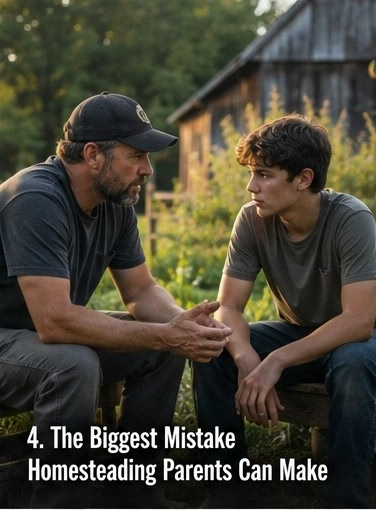
I think one of the biggest mistakes we can make as parents is trying to force our lifestyle onto our children.
It’s tempting.
We want them to appreciate hard work.
We want them to value simplicity.
We want them to understand where food comes from.
We want them to love the land.
But forcing teenagers into a lifestyle usually creates resentment, not appreciation.
There’s a fine line between teaching responsibility and trying to control someone’s future.
Teenagers still need chores. They still need discipline. They still need to contribute to the household. That’s part of becoming an adult. But they also need space to become themselves.
The goal shouldn’t be to raise kids who never leave the homestead.
The goal should be to raise capable adults who carry the values of the homestead wherever they go.
Maybe your child becomes a farmer.
Maybe they become a mechanic.
Maybe they open a bookstore and coffee shop.
Maybe they move to the city.
Maybe they leave for ten years and come back later.
You can’t fully control that.
And honestly, you shouldn’t.
Encouragement vs. Force
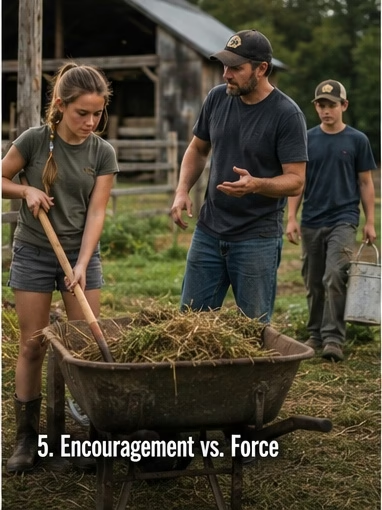
This is probably the hardest balance to find as a parent.
How much do you push?
How much do you let go?
If you force too much, teenagers rebel.
If you expect nothing, they become entitled.
Homestead life requires contribution. Animals still need feeding even when nobody feels motivated. Gardens still need watering. Wood still needs stacking.
That’s reality.
But I’ve learned that the way we approach those responsibilities matters.
Teenagers respond better when they feel respected rather than controlled.
Sometimes that means giving choices:
“Do you want to feed the animals or work in the garden?”
Sometimes it means connecting chores to real-world value:
“This work helps our family.”
And sometimes it means accepting that motivation won’t always be there.
Adults don’t wake up motivated every day either.
Part of growing up is learning responsibility even when you don’t feel like it.
What the Homestead Really Gives Our Children
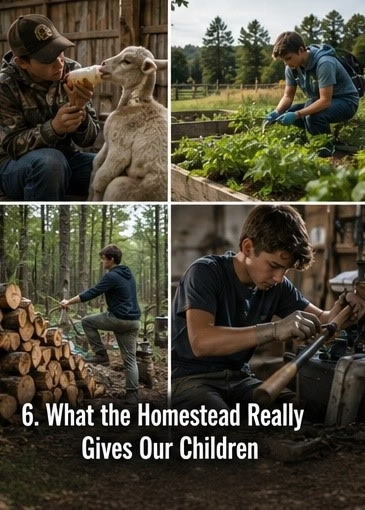
Even if our kids eventually leave the homestead, I believe this lifestyle still gives them something incredibly valuable.
It teaches resilience.
Kids raised on homesteads understand that life takes effort. They learn patience because plants don’t grow overnight. They learn responsibility because animals depend on them. They learn that weather doesn’t care about your plans. They learn problem-solving because something is always breaking.
Most importantly, they learn that happiness doesn’t always come from consuming more.
That lesson is becoming rare in today’s world.
Modern society pushes constant entertainment, constant convenience, and constant distraction. Homestead life teaches something quieter: fulfillment through purpose.
Even if my kids eventually choose different paths, I hope they carry that lesson with them forever.
I hope they remember campfires more than screens.
I hope they remember hard work more than comfort.
I hope they remember family dinners, muddy boots, fresh vegetables, and cold mornings feeding animals.
Those experiences shape people.
Letting Them Go Without Losing Them
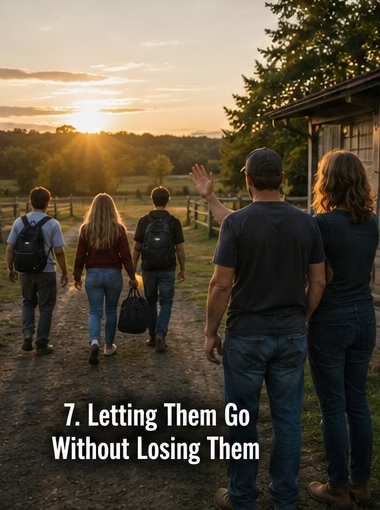
I think every parent eventually realizes that raising children is really a long process of slowly letting go.
That’s especially true with teenagers.
One day they’re following you around the farm asking a thousand questions.
The next day they’re talking about moving out, getting jobs, buying cars, or starting their own lives.
And if we’ve done our job well, they should.
That doesn’t mean the homestead failed.
It means the homestead helped prepare them for adulthood.
The truth is, many young adults need to leave home for a while to truly appreciate where they came from.
Maybe one day my oldest son will rediscover his love for fishing.
Maybe my daughter who dreams of a bookstore will one day realize the peaceful life she grew up with was special.
Maybe the daughter who loved animals will find a completely different passion.
Maybe my youngest boy will become the one who keeps the homestead alive.
Or maybe none of that happens.
And that’s okay too.
Because at the end of the day, the real success of parenting isn’t creating children who live exactly like us.
It’s raising good people.
If the homestead teaches kindness, responsibility, resilience, curiosity, and hard work, then it has already done its job.
Everything else is just part of their story.